
The VPN market continues to grow. Consumer awareness of digital privacy has increased significantly, and demand for VPN services extends beyond privacy enthusiasts to everyday users, remote workers, and international travelers. At the same time, the infrastructure to build a VPN service has become more accessible.
Starting a VPN business no longer requires building network infrastructure from scratch. Two models dominate the market for new entrants: the white label VPN model, where you launch a fully branded service on an existing platform, and the VPN reseller model, where you sell an existing service under a partnership agreement.
This guide covers both models — the differences, the investment levels, the timelines, and the considerations for choosing between them. Whether you are an entrepreneur, an existing business adding VPN to your portfolio, or an affiliate exploring the space, this guide provides the framework to make an informed decision.
The barrier to entry has dropped significantly. A decade ago, launching a VPN required substantial capital for server deployment, custom app development, and payment infrastructure. Today, white label platforms provide turnkey solutions: you bring your brand and marketing, the platform provides the technology. This shift has enabled hundreds of new VPN brands to launch, many targeting underserved niches rather than competing directly with global giants.
Related reading: How to Use a VPN on Crossfit Wi-Fi and White-Label VPN and Flarum on a branded site. White-Label VPN and Flarum Comments and White-Label VPN and Flarum Edge. What is a VPN? and Download KloxVPN.
Looking for a reliable VPN?
KloxVPN — from $2.83/month. Apps for every device.
Understanding the VPN Market Opportunity
The global VPN market was valued at approximately $44 billion in 2022 and is projected to grow significantly through the decade. Multiple factors drive this growth: remote work normalization, increased awareness of surveillance and data collection, streaming adoption across regions, and expansion of internet access in regions with censorship. New VPN brands enter successfully by targeting specific niches — geographic markets, specific use cases (gaming, streaming, business), or audience demographics.
- 1Skim the seating / order diagram.
- 2Do the numbered steps once on your real network.
- 3Use the FAQ if a sentence was too long.
- 4Follow one related article — not ten tabs.
How to read this page
Market niches with lower competition
Rather than competing head-on with established global VPN providers, new entrants tend to be most successful targeting specific markets: regional brands for countries underserved by English-language VPN companies, VPN services bundled with other privacy or security products, enterprise or SMB VPN for specific industries, or VPN services targeting specific platforms (gaming VPN, streaming VPN, router VPN). Each niche has different acquisition channels, pricing expectations, and support requirements. Research your target segment before launch — understanding customer needs and pain points informs your positioning and feature priorities.
Model 1: White Label VPN
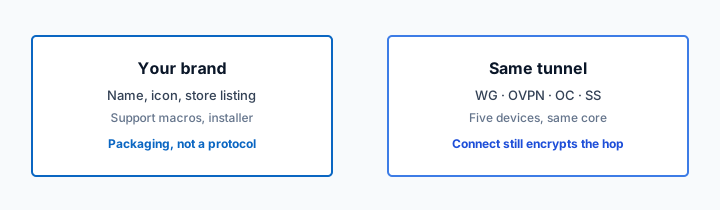
A white label VPN is a complete VPN business platform — apps, infrastructure, billing, admin panel — delivered with your brand applied to it. You pay the platform provider for the underlying technology, apply your branding, and launch under your own company identity.
| Fact | KloxVPN | Not on this page |
|---|---|---|
| Protocols | WireGuard, OpenVPN, OpenConnect, and Shadowsocks | A third invented protocol |
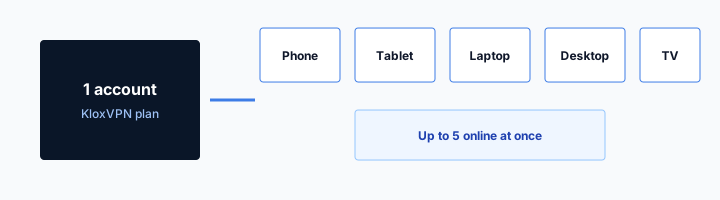
| Devices | Five simultaneous | Unlimited seats |
| Yearly | From $2.83/month | A fake city count |
| Refund | 7-day, first purchase | An On Demand toggle |
What is included
A quality white label VPN platform includes branded apps for Android, iOS, Windows, macOS, and Linux (and optionally Chrome Extension, TV App, Router). The admin management dashboard for user and subscription management. The user portal and billing system. The global VPN server network. Protocol support (WireGuard, OpenVPN, OpenConnect, Shadowsocks). API integration capabilities. App store publishing support.
Deployment models: Hosted vs Source Code
Hosted white label: The platform provider operates and maintains the infrastructure. You use their global server network. Billing is typically per active user per month. Low upfront investment, no infrastructure operations burden. Full source code: You receive the complete codebase and install it on your own servers. Full control over infrastructure, costs, and architecture. Higher upfront investment. Suitable for businesses planning significant scale or requiring data sovereignty in specific regions.
Timeline to launch
For a hosted white label VPN, the typical timeline from agreement to go-live is 7–14 days. Branding and app customization takes 2-5 days. Server configuration is handled by the platform provider. App store submission and review takes 3-7 days. Full source code deployments take longer — typically 2-4 weeks depending on server infrastructure readiness.
What you need to provide
Your own brand assets (logo, colors, app name, domain), developer accounts for Google Play and Apple App Store, a payment processor account (Stripe or similar), and a website. Some providers can develop the website as an additional service.
Model 2: VPN Reseller
A VPN reseller program allows you to sell an existing VPN service to your customers and earn recurring commission on each subscription. You do not launch a new branded VPN service — you sell an established one under a partnership arrangement.
how to start vpn business stays on the box. The hop wrap stays in the app.
— KloxVPN operator notes
How the reseller model works
You join the reseller program and receive access to a partner dashboard. You create customer accounts, generate subscription links, and sell VPN access to your clients. Your clients receive access to the VPN service under its original branding. You earn a commission percentage on each active subscription you manage. The VPN provider handles all technical infrastructure, customer support, and service operation.
Advantages of the reseller model
No upfront investment in infrastructure or app development. No operational responsibility for servers, maintenance, or technical support. Faster path to revenue — you can begin selling immediately after approval. Lower risk: you are reselling a tested, operational service with an existing brand.
Limitations of the reseller model
No brand ownership — you are selling someone else's service. Limited differentiation from other resellers of the same product. Commission-based revenue structure rather than full margin. Less control over pricing, features, and service policies.
Choosing Between White Label and Reseller
The decision framework is straightforward: your available investment, desired brand ownership, and long-term business goals determine which model fits.
Choose white label if
You want to build a named brand in the VPN market. You have budget for development and launch costs. You want full control over pricing, features, and customer experience. You are building for the long term and want the brand equity of a recognized VPN company.
Choose reseller if
You want to start immediately with minimal investment. You have an existing customer base that would benefit from VPN access (IT services company, hosting provider, affiliate). You want to test the VPN market before committing to white label investment. Technical operation of a VPN service is not something you want to manage.
Key Business Considerations
Beyond the technical model, several business considerations determine the viability of a new VPN service.
Legal and compliance
VPN services operate in a complex legal environment. Key considerations: jurisdiction of your company formation affects data retention obligations. Privacy policy and no-logs policy must be clearly documented and accurate. Some countries require registration for VPN service providers. Payment processing for privacy services may face restrictions from some processors — verify before launch.
Pricing strategy
The consumer VPN market has compressed pricing significantly. Competitive yearly plan pricing typically ranges from $2-5 per month billed annually. Monthly billing carries higher churn. Focus marketing on the value of the yearly plan for both conversion and retention.
Marketing and Customer Acquisition
Launching a VPN is only the first step. Acquiring customers requires a clear strategy and execution.
Content and SEO
VPN is a high-intent search category. Users search for "best VPN for [use case]" and "VPN for [country]." Build content around these queries — setup guides, comparison articles, use case pages. Target long-tail keywords where established brands have less dominance. Publish regularly; SEO compounds over time. Internal linking between related articles improves rankings. Focus on topics your target niche actually searches for — regional VPN guides, platform-specific setup (VPN for Chromebook, VPN for Kodi), or use-case content (VPN for streaming, VPN for gaming).
Affiliate and referral programs
Many VPN customers come through affiliates — tech reviewers, privacy bloggers, YouTubers. Offer competitive commission rates and provide affiliates with landing pages, creatives, and tracking. A well-run affiliate program can drive a significant portion of early revenue.
Trust and social proof
The VPN market is saturated with claims. Differentiate through transparency: publish your no-logs policy, share audit results, offer money-back guarantees. User reviews and testimonials matter — encourage satisfied customers to leave feedback.
Post-Launch Operations
Once your VPN is live, ongoing operations determine success.
Customer support
VPN users need help with setup, billing, and troubleshooting. Offer live chat, email support, or a knowledge base. Response time and resolution quality affect churn. Consider outsourcing tier-1 support if volume grows.
Server performance and maintenance
In the hosted model, the platform provider handles this. In the source code model, you monitor server health, apply updates, and scale capacity. Downtime and slow servers drive cancellations.
Retention and churn
VPN churn is typically 5-10% monthly for monthly plans, lower for annual. Reduce churn through: reliable service, clear communication, onboarding emails, and proactive outreach when users report issues. A 10% improvement in retention compounds significantly.
Scaling Your VPN Business
Growth brings new challenges. Planning for scale from the start reduces friction later.
When to Add More Servers
In the hosted white label model, the platform provider scales infrastructure. You may have options to add regions or dedicated servers as you grow. In the source code model, monitor server load and add capacity before congestion affects user experience. Typical triggers: latency complaints, support tickets about slow speeds, or sustained high CPU usage.
Team and Support Scaling
Solo operators can handle 500-1000 users with good documentation and templated support. Beyond that, consider dedicated support staff or outsourcing. Tier-1 support can be outsourced; technical escalation should stay in-house or with the platform provider. Document common issues and create a knowledge base early.
Revenue and Unit Economics
Track customer acquisition cost (CAC), lifetime value (LTV), and churn. A healthy VPN business typically has LTV 3x or higher than CAC. Annual plans improve LTV; focus conversion there. Monitor which acquisition channels (SEO, affiliates, paid) deliver the best LTV. Double down on what works.
Common Pitfalls for New VPN Operators
Avoid these mistakes that derail new VPN businesses.
Underestimating Support Load
VPN users need help with setup, billing, and troubleshooting. Plan for 2-5% of users to contact support in the first month. Have documentation ready before launch. A knowledge base reduces repetitive questions.
Ignoring Compliance
Privacy policies must accurately reflect what you log. Overclaiming "no logs" when you retain connection data creates legal risk. Work with the platform provider to understand exactly what data exists and where. Document your data handling in a clear, auditable way.
Generic Positioning
"Best VPN" is dominated by established brands with large budgets. New entrants succeed by owning a niche: "VPN for Brazil," "VPN for streaming," "VPN for remote teams." Define your differentiator before launch and build content around it.
Technical Requirements and Infrastructure
Understanding what runs behind a VPN business helps you evaluate providers and plan for scale.
Server Network Architecture
VPN servers are deployed globally; each location handles traffic for users in that region. The platform provider manages server deployment, load balancing, and maintenance. In the hosted model, you use their network. In the source code model, you deploy to your own VPS or bare metal. Server count and geographic distribution affect user experience.
Protocol and Encryption Stack
Quality platforms support WireGuard, OpenVPN, and Shadowsocks. WireGuard is the default for speed; OpenVPN for compatibility; Shadowsocks for censorship bypass. Encryption is typically AES-256 or ChaCha20. The platform handles protocol implementation — you configure which to offer in the admin panel.
Billing and Payment Integration
Stripe is the standard for VPN subscription billing. The platform integrates with Stripe (or similar) for recurring payments, refunds, and dunning. You need a Stripe account and may need to verify your business. Some processors restrict VPN or privacy services — confirm before launch.
Launch Checklist: Before You Go Live
A pre-launch checklist helps avoid common post-launch issues.
Legal and compliance
Privacy policy published and accurate. Terms of service in place. No-logs policy documented. Business registration complete. Jurisdiction and data handling clearly stated. Consult a lawyer for your specific situation.
Support readiness
Knowledge base or FAQ live. Support email or chat configured. Response time expectations set. Document common issues (setup, billing, connection) before users ask.
Marketing and tracking
Website live with clear value proposition. Analytics configured (respecting privacy). Affiliate or referral program ready if applicable. Social media accounts claimed. SEO basics: meta tags, sitemap.
From Reseller to White Label: When to Upgrade
Resellers sometimes transition to white label as their business grows.
Signals It Is Time
You have a steady customer base and recurring revenue. You want to own the brand and customer relationship. Commission margins feel limiting. You are ready to invest in infrastructure and operations. The reseller model has validated demand in your market.
Migration Considerations
Migrating customers from a resold service to your own white label requires communication and possibly incentives. Customers must create new accounts and reinstall apps. Offer a discount or extended trial to ease the transition. Plan for some churn during migration.
Hybrid Approach
Some businesses run both: resell for low-touch customers, white label for those who want the branded experience. This requires managing two products but can maximize reach. Evaluate based on your capacity and market.
Customer Support Best Practices
Support quality directly affects retention and reputation.
Common Support Questions
Setup help, billing, connection issues, and "why is it slow" dominate the queue. Create FAQ and knowledge base articles for these. Link to them in support responses. Reduces repetitive work and improves resolution time.
Escalation Paths
Tier-1 support handles basic questions. Technical issues (VPN not connecting, protocol problems) may need escalation to the platform provider or your technical team. Define clear escalation criteria. Document solutions for recurring issues.
Response Time Expectations
Set and communicate response time expectations. Same-day for email is acceptable for many users. Live chat implies faster response. Under-promise and over-deliver. Slow support is a common complaint in VPN reviews.
Year One: Realistic Expectations
What to expect in your first year of VPN operations.
Revenue Ramp
Most new VPN businesses take 3-6 months to reach meaningful revenue. SEO takes time to rank. Affiliate relationships need nurturing. Paid acquisition has a learning curve. Plan for a runway; do not expect profitability in month one.
Key Metrics to Watch
Track signups, conversions (trial to paid), churn, and support volume. Conversion rate and churn directly affect unit economics. Support volume indicates documentation gaps. Use the data to iterate on onboarding, pricing, and content. Most platforms provide basic analytics; supplement with your own tracking if needed.
How a tunnel applies to How to Start a VPN Business: Complete Guide
How to Start a VPN Business: Complete Guide Wi-Fi is still a LAN you do not run. {place} is a location, not a protocol. If someone asks for a How to Start a VPN Business: Complete Guide mode, send this slug. Same apps. same four protocols. Five devices means five. It does not mean a How to Start a VPN Business: Complete Guide site license. Share the account inside that cap. If UDP dies on How to Start a VPN Business: Complete Guide APs, one protocol swap. Then stop tinkering.
Airport, hotel, campus, How to Start a VPN Business: Complete Guide: the label changes. The hop does not. Untrusted LAN, then wrap. Do not invent a city because the SSID mentioned a brand. Connect to a node. That is enough. HTTPS on the website is not a hop wrap. RFC 8446 is TLS. Different job from Connect on How to Start a VPN Business: Complete Guide Wi-Fi. Land, sign in, wrap. Repeat it until it is boring. Boring is the goal.
Leak tests belong after Connect, not while the How to Start a VPN Business: Complete Guide sign-in page is still painting. Open a browser first. If the garden needs a click, give it the click. Then open Klox. That order fixes most How to Start a VPN Business: Complete Guide loops. Phone hotspot versus How to Start a VPN Business: Complete Guide AP: different radios, same rule. Untrusted hop, then wrap, then work. How to Start a VPN Business: Complete Guide Wi-Fi is shared. Finish the portal. Then WireGuard, OpenVPN, OpenConnect, and Shadowsocks.
Order of operations
Join. Portal. Connect. That order is the How to Start a VPN Business: Complete Guide ritual. Everything else is optional tinkering. Guest VLANs can isolate you and still see destinations until the tunnel is up. Isolation is not a wrap. See Cloudflare's VPN explainer if you need the noun. The SSID can say How to Start a VPN Business: Complete Guide or Coffee. The noun does not change. Apps at /download. Plans at /pricing. Garden in the browser. Tunnel in the app.
Captive pages see the first request. Fire the tunnel too early and the sign-in never opens. Never fire it and the LAN keeps reading destinations. Smart Connect belongs on untrusted Wi-Fi. It is not a per-SSID profile named How to Start a VPN Business: Complete Guide. Staff SSIDs still dump you through NAT. "Staff" is a word. How to Start a VPN Business: Complete Guide is a word. Neither word is a private backbone. Send this slug when someone asks for a special How to Start a VPN Business: Complete Guide profile. There is not one.
Someone else owns the AP on How to Start a VPN Business: Complete Guide networks. Guest SSIDs still NAT you. That is the whole physics lesson. A QR code next to the kettle is still HTTP to a portal. It is not Connect. Finish it. If WireGuard hangs for a minute on How to Start a VPN Business: Complete Guide Wi-Fi, wait out the portal, confirm you have a WAN, then try OpenVPN once. The SSID label does not change the physics. Wrap after sign-in.
When to stop tinkering
You do not need a special build because the SSID says How to Start a VPN Business: Complete Guide. You need the same Klox app you would use at a cafe. Inner DNS through the tunnel is the setting you wanted. The LAN seeing a blob to a node is success. If you need a plan, /pricing. If you need the binary, /download. If you need the garden to open, use a browser first. No How to Start a VPN Business: Complete Guide mode. Same apps. Same five devices. Same yearly $2.83/mo on yearly.
This slug is a habit page for How to Start a VPN Business: Complete Guide networks, not a new SKU. Device limit stays five devices. Yearly stays $2.83/mo on yearly. Cookies at /cookie do not open the portal. The portal opens in a browser. Then the app. A QR by the kettle is still a captive garden. Finish it. Then Connect. Then test leaks if you care. Portal first. Handshake second. Leak test third. That is the whole checklist.
UDP can die on rude APs that happen to be labeled How to Start a VPN Business: Complete Guide. Switch to OpenVPN once. Do not stack three clients. Confirm you have a WAN before you blame the protocol. A captive garden with no accept button is not a WireGuard bug. Inner packets stay inner. Outer header goes to a node. How to Start a VPN Business: Complete Guide NAT still exists. You wanted that. You are done when Connect is up and the portal is in the past. Not when you renamed a sysctl.
Key Takeaways
Starting a VPN business in 2025 is genuinely accessible. The white label model provides everything needed to launch a branded VPN service in 1-2 weeks with a known cost structure. The reseller model provides an even faster path to revenue with no upfront infrastructure investment.
The key to success in either model is differentiation — targeting a specific market segment, geographic region, or use case rather than competing on the generic "best VPN" positioning used by established global providers. Plan your marketing and operations from day one; the technical launch is the beginning, not the end.
Scale deliberately. Track unit economics from the start. Invest in support and documentation before you need them. Avoid the pitfalls: overclaiming on privacy, generic positioning, and underestimating operational load. The VPN market rewards operators who build trust and serve their niche well. Whether you choose reseller or white label, the opportunity is real — execute with focus and consistency. The VPN market continues to grow; there is room for new entrants who serve their customers well.
Related Resources
Launch Your Own VPN Business
KloxVPN provides complete white label VPN platforms and reseller programs. Custom branding, global servers, admin dashboard.
Explore White Label VPNFrequently Asked Questions
KloxVPN Team
Experts in VPN infrastructure, network security, and online privacy. The KloxVPN team has been building and operating VPN services since 2019, providing consumer and white-label VPN solutions to thousands of users worldwide.